
Via ferrata routes are protected mountain paths equipped with steel cables, ladders, steps and other fixed features. They allow hikers to experience steep alpine terrain while using a harness, via ferrata lanyard and helmet for protection.
The routes on this page are suitable for beginners or for people who are still building confidence on exposed mountain terrain. They vary in length, difficulty and exposure, so read the individual route guides carefully before choosing one.
Start with a route that matches your experience, fitness, weather conditions and comfort with heights. A route described as beginner-friendly can still involve steep terrain, scrambling, exposure and changing mountain conditions.
What makes via ferrata routes suitable for beginners?
A beginner-friendly via ferrata usually has a clearly marked route, continuous protection, manageable exposure and technical sections that do not require advanced climbing skills. It may still include steep paths, ladders, narrow ledges or short exposed sections.
When choosing a first route, consider more than the official difficulty grade. Pay attention to the total duration, approach walk, descent, altitude gain, exposure, escape options and weather forecast.
Via Ferrata Routes for Beginners in the Italian Dolomites
The Italian Dolomites are one of the best-known areas for via ferrata, with routes ranging from short introductory climbs to demanding high-mountain traverses. The routes below are selected for their accessibility, manageable technical sections or suitability for people gaining experience.
Use the route details to compare duration, exposure, difficulty and logistics before deciding which one fits your plans.
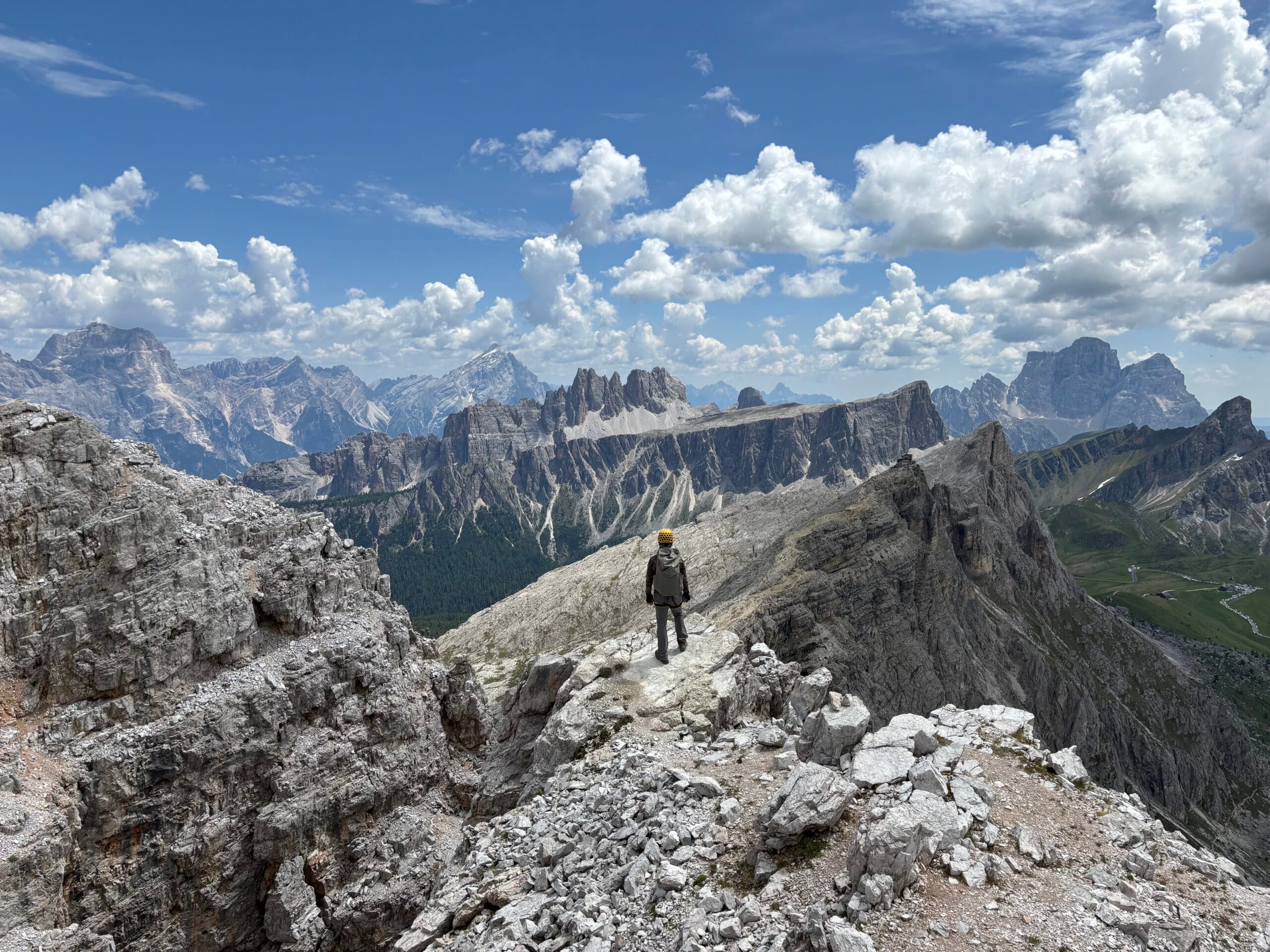
Via ferrata Averau
Short, beginner friendly route leading to the summit of Averau. Right next to the famous Cinque Torri towers and the impressive Tofane mountain group.
Approach: easy
Commitment: low
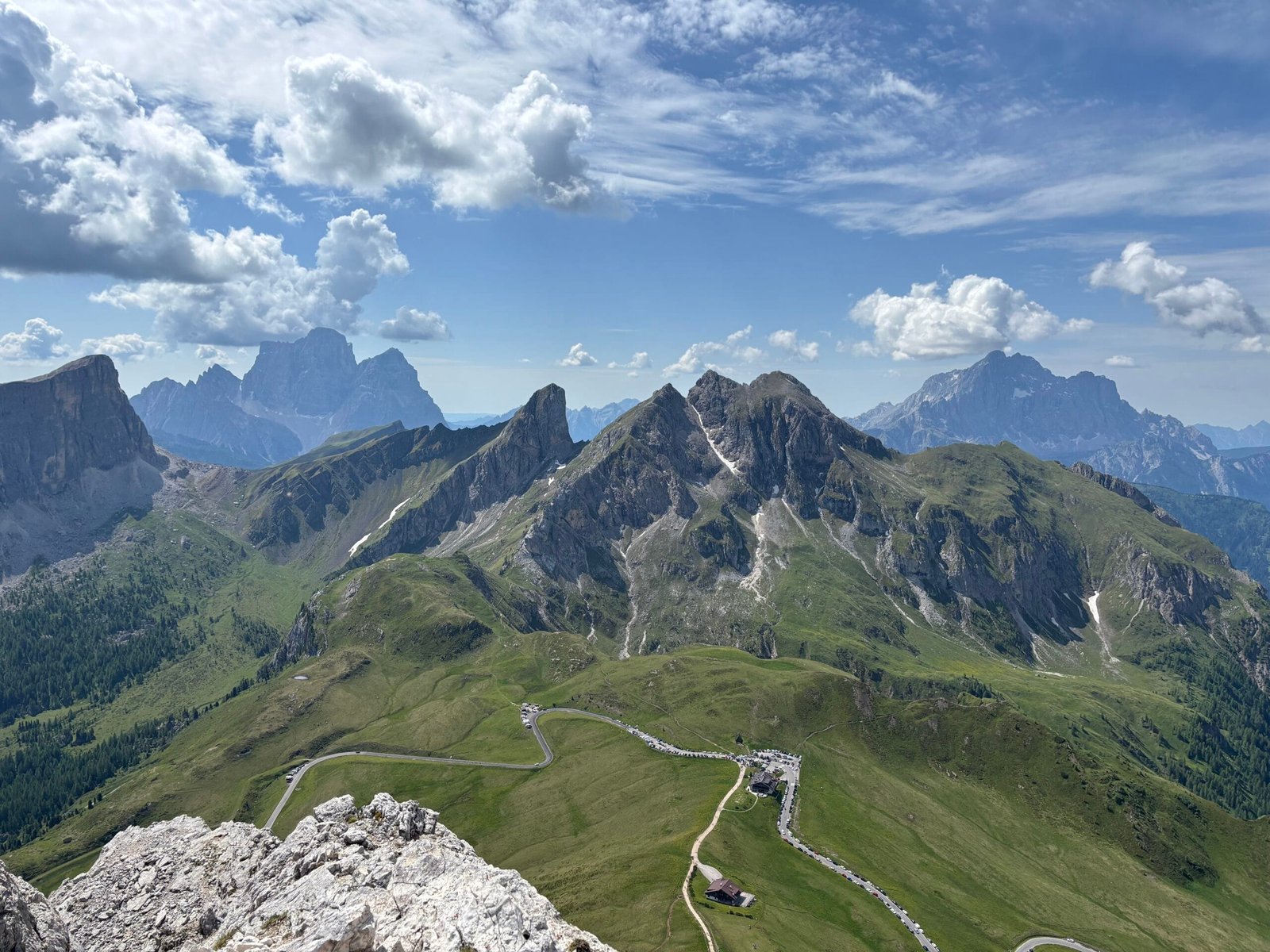
Via ferrata Ra Gusela
Ra Gusela is an incredibly photogenic mountain in the Nuvolau Dolomites, Italy. Rising in all its majesty from the Passo Giau mountain pass.
Approach: easy
Commitment: low
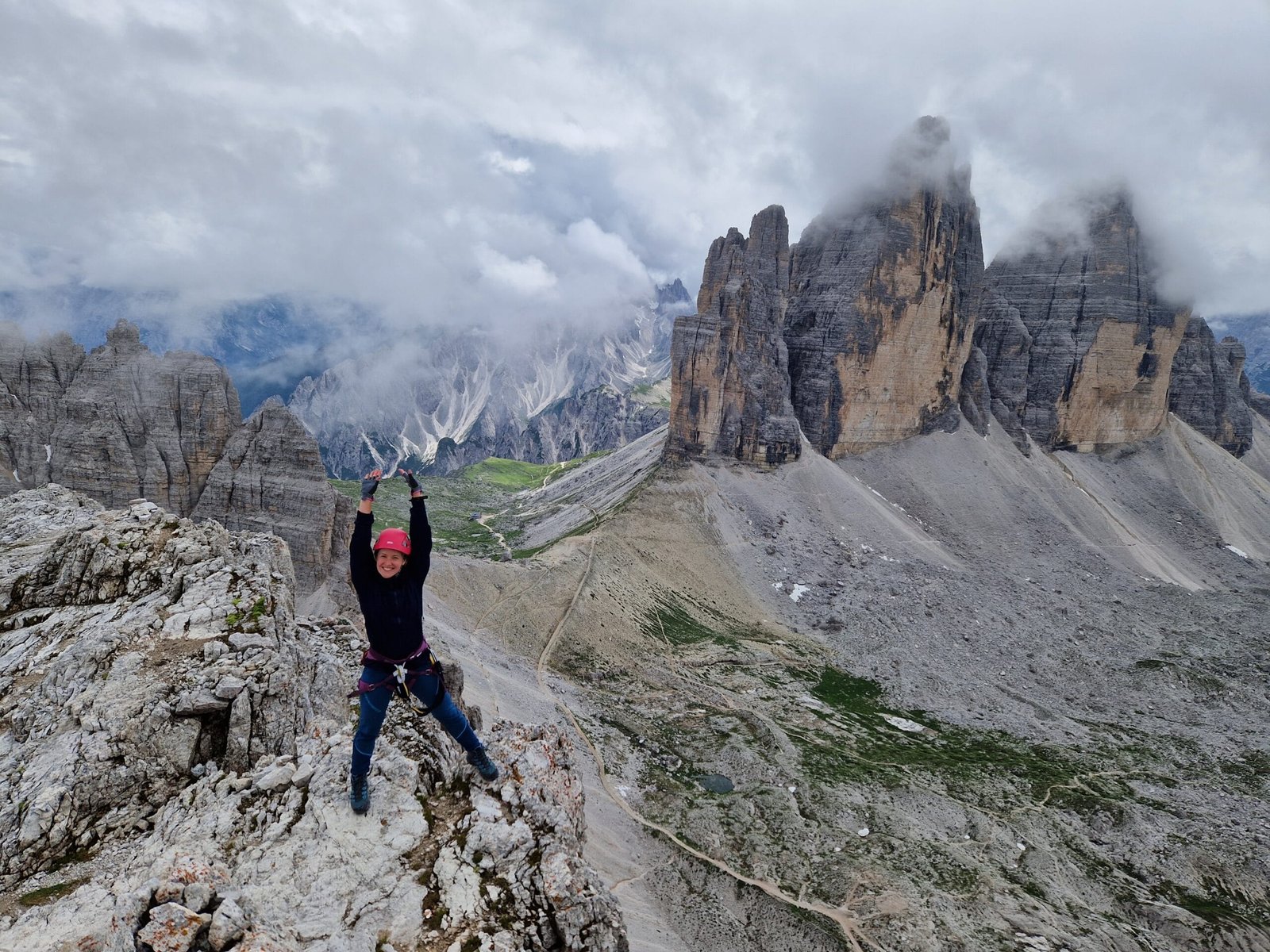
Via Ferrata de Luca – Innerkofler
The most challenging via ferrata route in the Sella group, with steep and exposed sections suited to experienced climbers.
Approach: easy
Commitment: medium
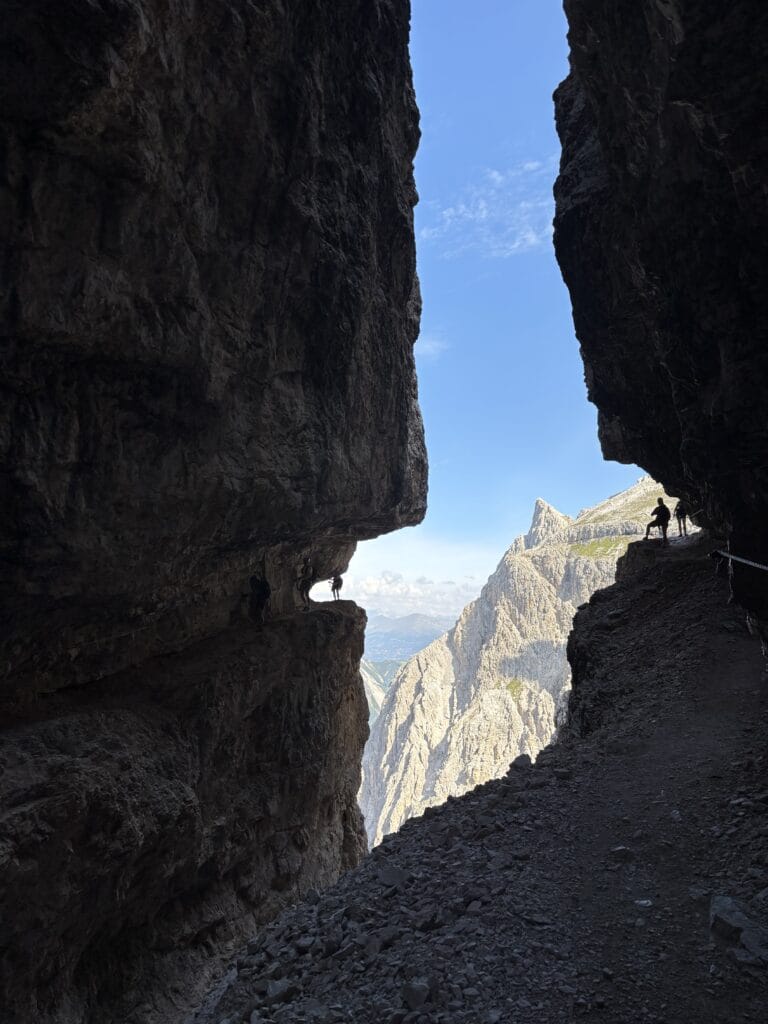
Via ferrata Strada degli Alpini
Via ferrata that follows an old wartime path, crossing the ledges Cengia della Salvezza carved directly into the rocks.
Approach: medium
Commitment: high
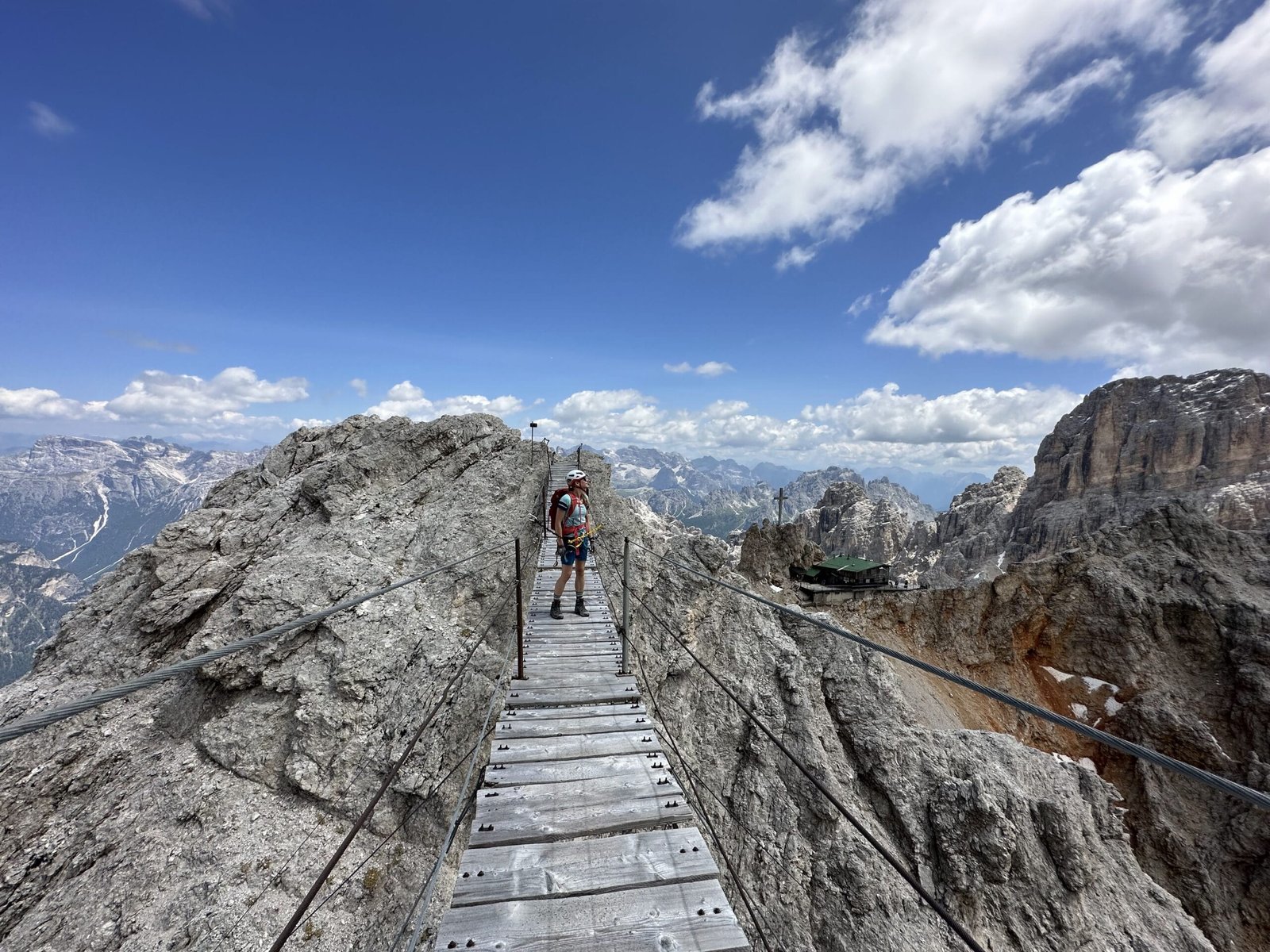
Via ferrata Ivano Dibona
A long and demanding Monte Cristallo route near Cortina, featuring exposed ridges and the most famous and suspension bridge in Italian Dolomites.
Approach: hard
Commitment: high
Via Ferrata Routes for Beginners in Other Alpine Regions
Beginner-friendly via ferratas can also be found outside the Dolomites, including other parts of the Alps. These routes differ in terrain, grading systems, altitude and approach difficulty. Check the individual guide for local conditions, equipment requirements and access information before planning your trip.
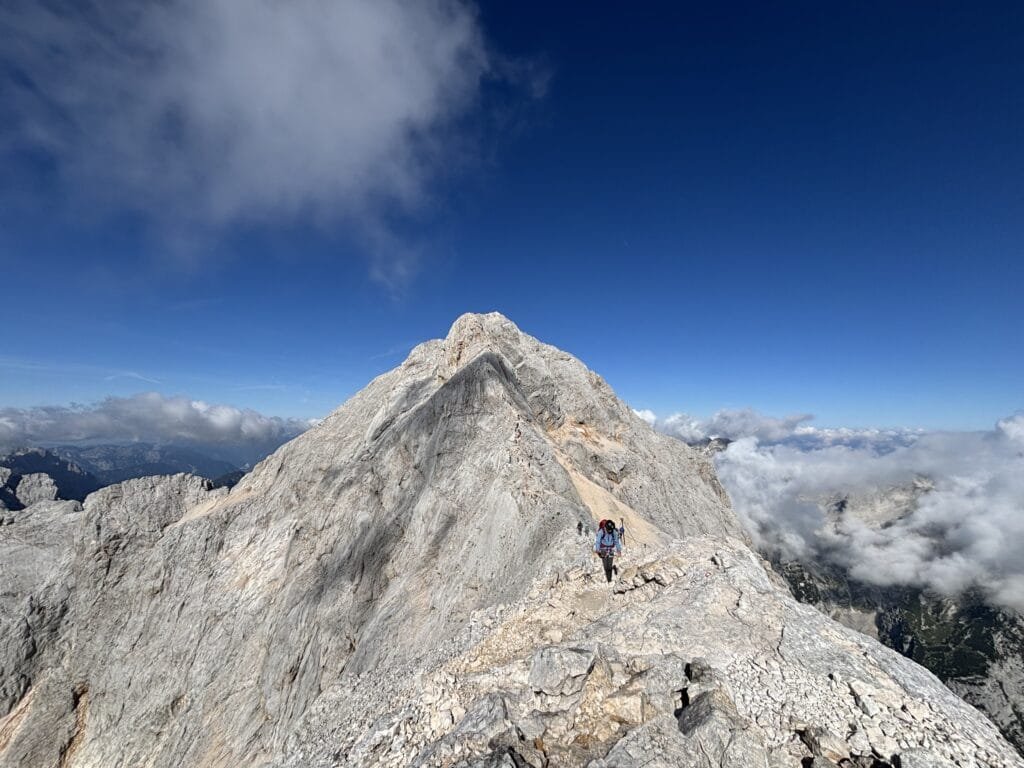
Climbing Triglav in One Day
10-hour ascent of Slovenia’s highest mountain, including exposed terrain and via ferrata sections.
Approach: medium
Commitment: medium
How to Choose Your First Via Ferrata
Your first via ferrata should match your current hiking experience, fitness and comfort with heights. A shorter route with a simple approach and easy descent is often a better first experience than a famous route with long exposed sections.
Before choosing a route, ask yourself:
- How comfortable am I with heights and exposure?
- Do I have the correct equipment and know how to use it?
- Can I manage the approach and descent as well as the protected section?
- Is the route suitable for the weather forecast?
- Is there an escape route if I become tired or uncomfortable?
What Beginners Should Know Before Starting
Beginner friendly does not mean risk free. Via ferrata routes take place in exposed mountain environments, where rockfall, storms, wet rock, snow, strong wind and route-finding problems can create serious risks.
Wear a helmet, harness and via ferrata lanyard designed for the activity. Check the equipment before starting and learn how the energy absorber works. Keep both attachment points connected to the cable when moving between sections.
Check the weather and route conditions, start early enough to finish safely, and turn back if the conditions or your energy level deteriorate.
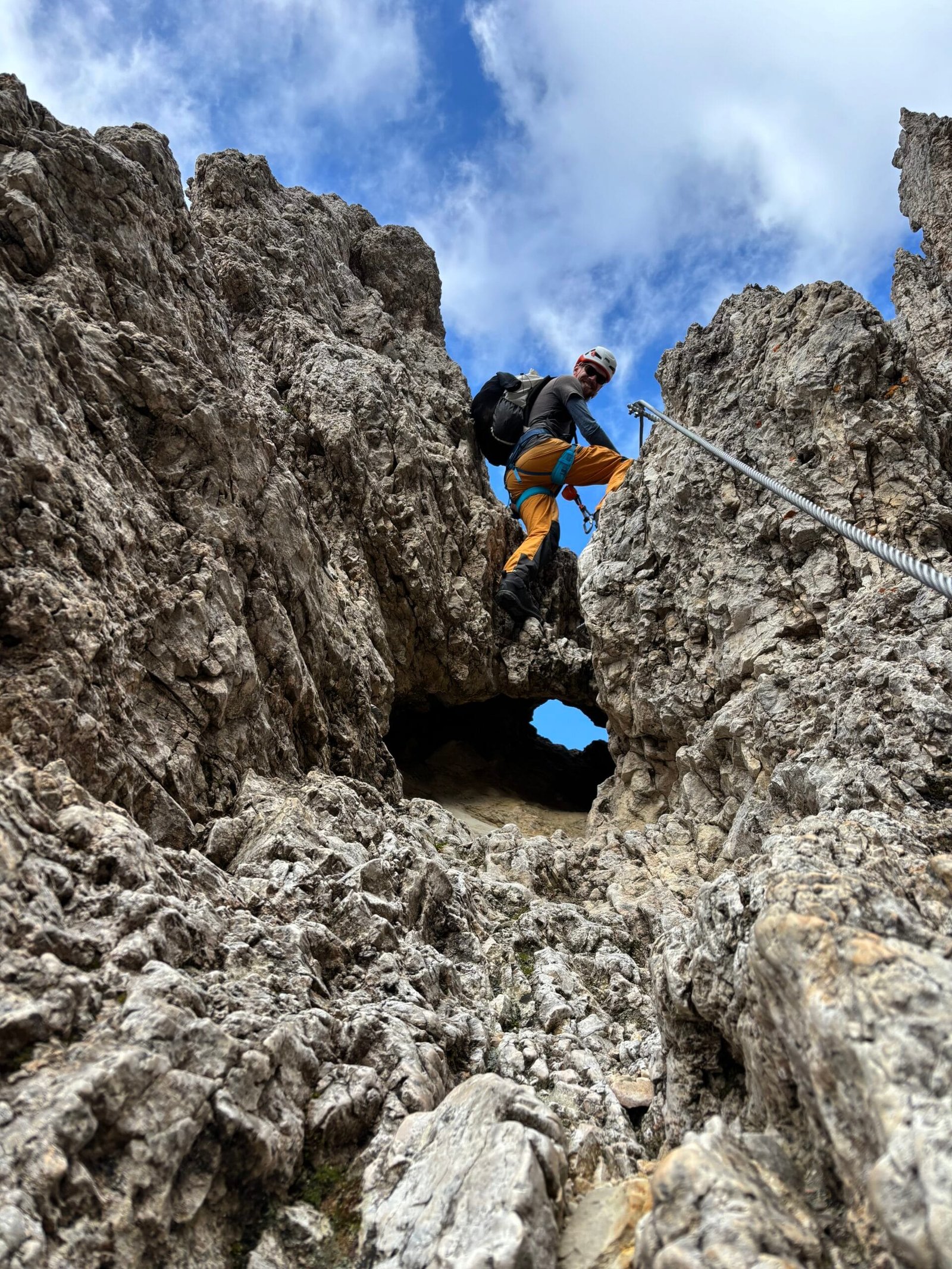
New to via ferratas?
Before choosing a route, learn about the equipment, grading systems and basic considerations involved in via ferrata. My beginner’s guide will help you understand what to expect.
Find Your next Via Ferrata
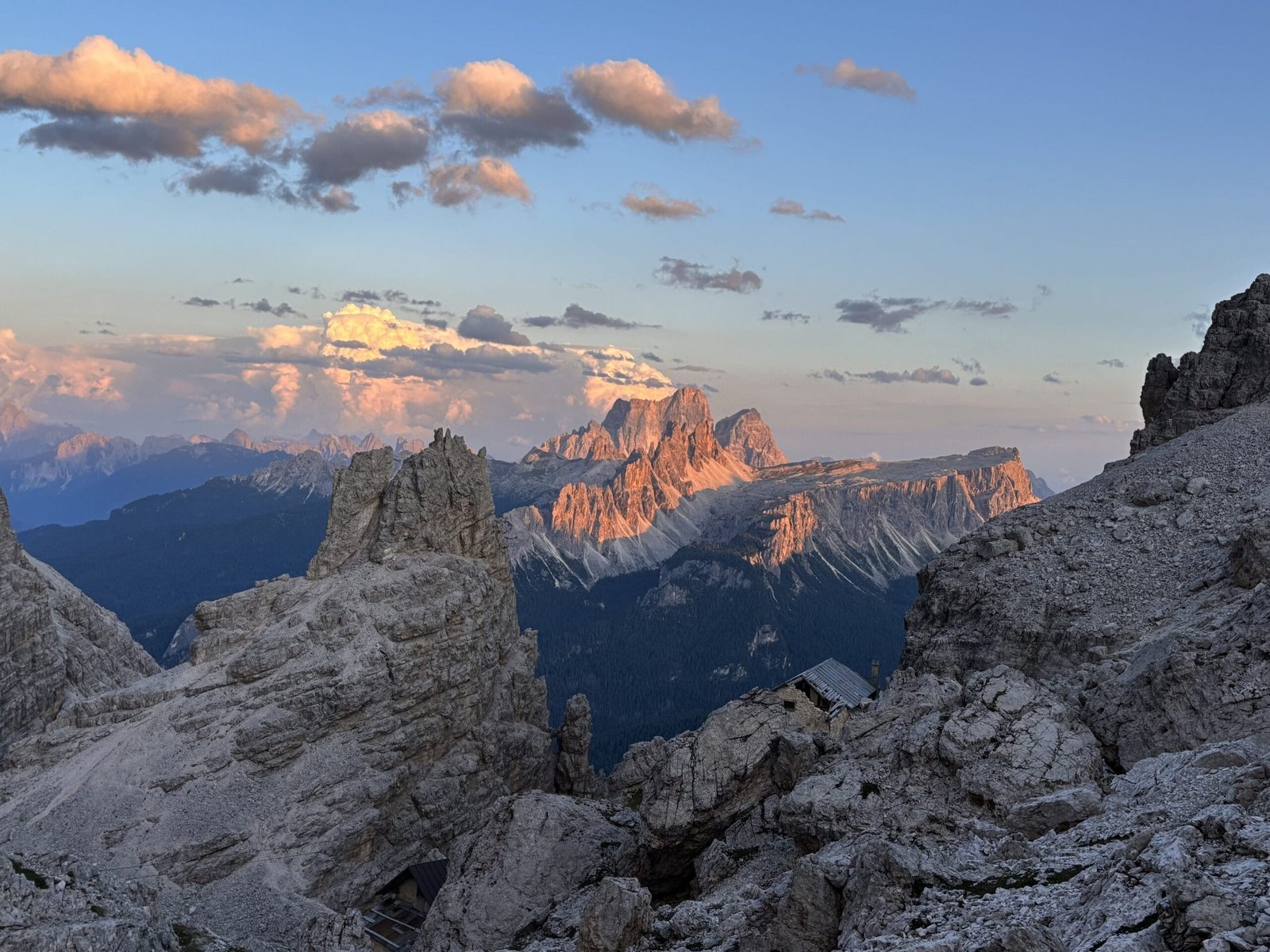
Explore Via Ferrata Routes in Italian Dolomites
The Italian Dolomites are home to some of the most spectacular via ferratas in the Alps.
Explore Via Ferrata Routes in Other Alpine Regions
Via ferratas can be found throughout the Alps, from France to Austria and other regions.