
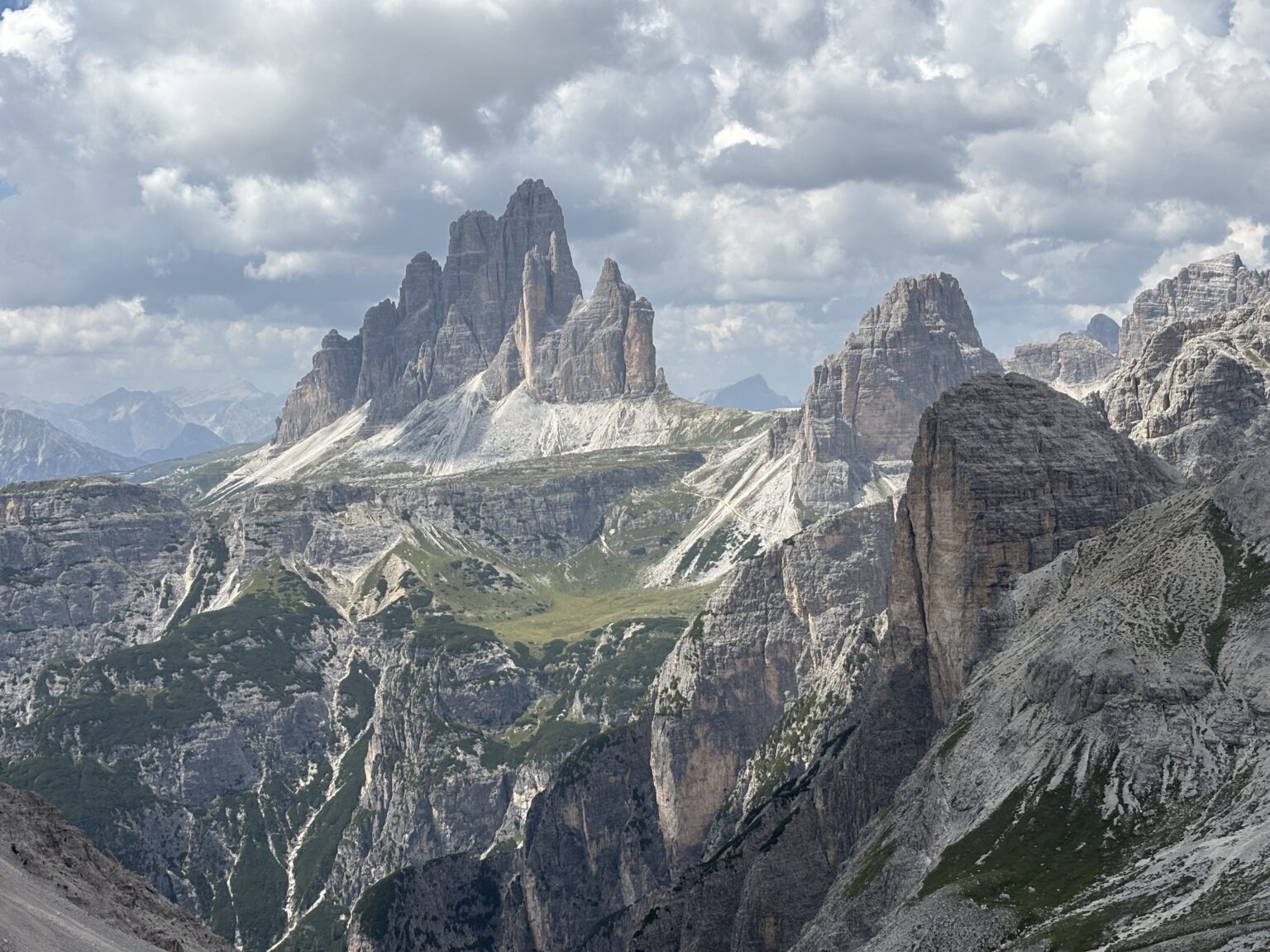

The Monte Popera Circuit is a demanding 4-day hut-to-hut via ferrata itinerary in Italy’s Sexten Dolomites. The route covers 47 km and 3,669 m of elevation gain across six via ferratas, including several C and C/D sections. This guide explains each stage, hut logistics, equipment, access, and who should attempt the route. It is not suitable for beginners.
Monte Popera Circuit at a Glance
- 📍 Location: Sesto Dolomites, Italy
- 🧗♀️ Difficulty Grade: hardest sections up to C/D
- ⏰ Duration: 4 days
- 📏 Total Distance: 47 km
- 📈 Total Elevation Gain: 3,669 m
- ⛰️ Highest Point: Croda Rossa summit – 2,965 m
- 🍁 Season: July to mid September
Part of the via ferratas are north facing and might not be accessible early in the season. Always check via ferrata conditions before heading out! - 🪢 Equipment & Preparation: For more information on gear and preparation read the article Via Ferrata: What You Need to Know Before Starting
- ⚠️ Not suitable for beginners
This is an advanced multi-day route for experienced via ferrata hikers who are comfortable with exposure, sustained climbing, long mountain days and changing conditions. The circuit includes difficult C and C/D sections and some parts have limited or impractical escape options once the route has started. Beginners should start with easier, shorter routes before considering Monte Popera Circuit. You can find easier route options in the Via ferratas for Beginners section.
Monte Popera Circuit Map
6 Via Ferratas in the Monte Popera Circuit
The Monte Popera Circuit consists of six via ferratas, ranging from easy to very difficult. Before starting the journey, it is crucial to ensure you are capable of handling the most difficult sections.
- Via ferrata Nord – A/B
- Via ferrata Mario Zandonella – C
- Via ferrata Aldo Roghel – C/D
- Via ferrata Cengia Gabriella – C/D
- Via ferrata Severino Casara – C
- Via ferrata Strada degli Alpini – B
For more information on the via ferrata grading system see article Via Ferrata: What You Need to Know Before Starting.
3 Mountain Huts in The Monte Popera Circuit
The best way to complete the whole Monte Popera Circuit is to stay overnight in the mountain huts – rifugios. There will be 3 of them on the way:
4 Day Monte Popera Circuit Itinerary
|
Stage |
Distance |
Elevation Gain |
Overnight Stay |
Main difficulty |
|---|---|---|---|---|
|
Day 1 |
10 km |
1,064 m |
Difficult descent and exposure |
|
|
Day 2 |
11 km |
1,139 m |
Longest and most demanding ferrata section |
|
|
Day 3 |
9 km |
600 m |
Optional harder route or easier hiking alternative |
|
|
Day 4 |
12 km |
770 m |
Return to lift area |
Easier final day, but still alpine terrain |
Day 1: Rotwand Lift to Rifugio Berti
- Starting point: Rotwand Croda Rossa cable car
- Distance: 10 km
- Elevation gain: 1,064 m
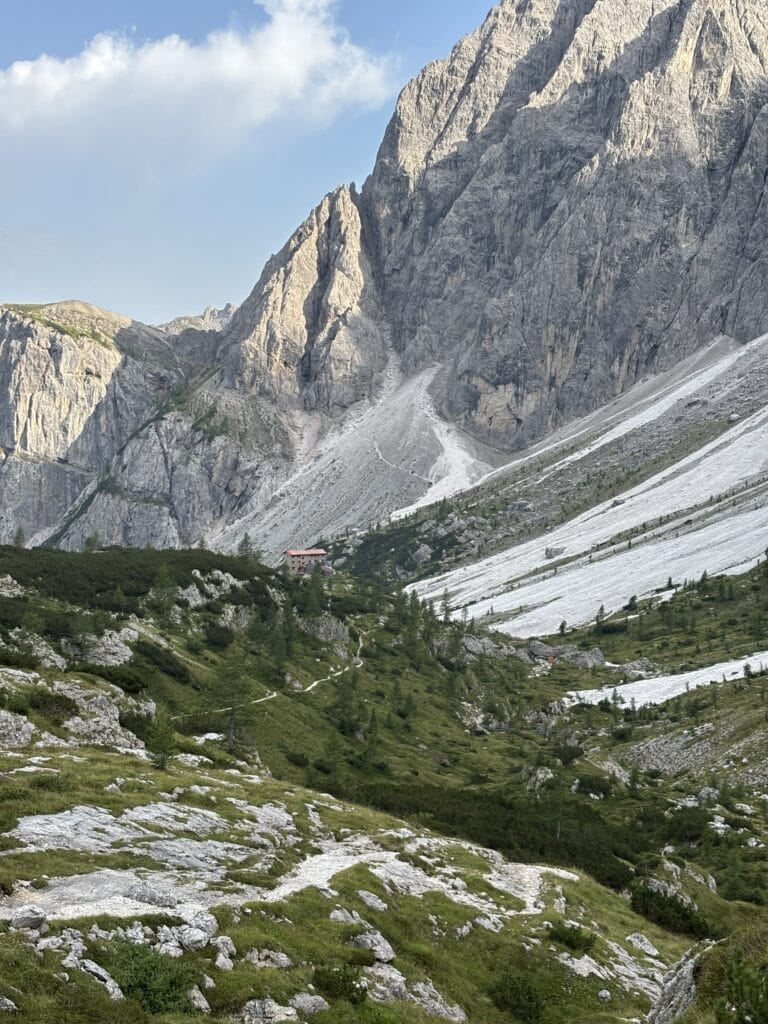
- Finish point: Rifugio Berti
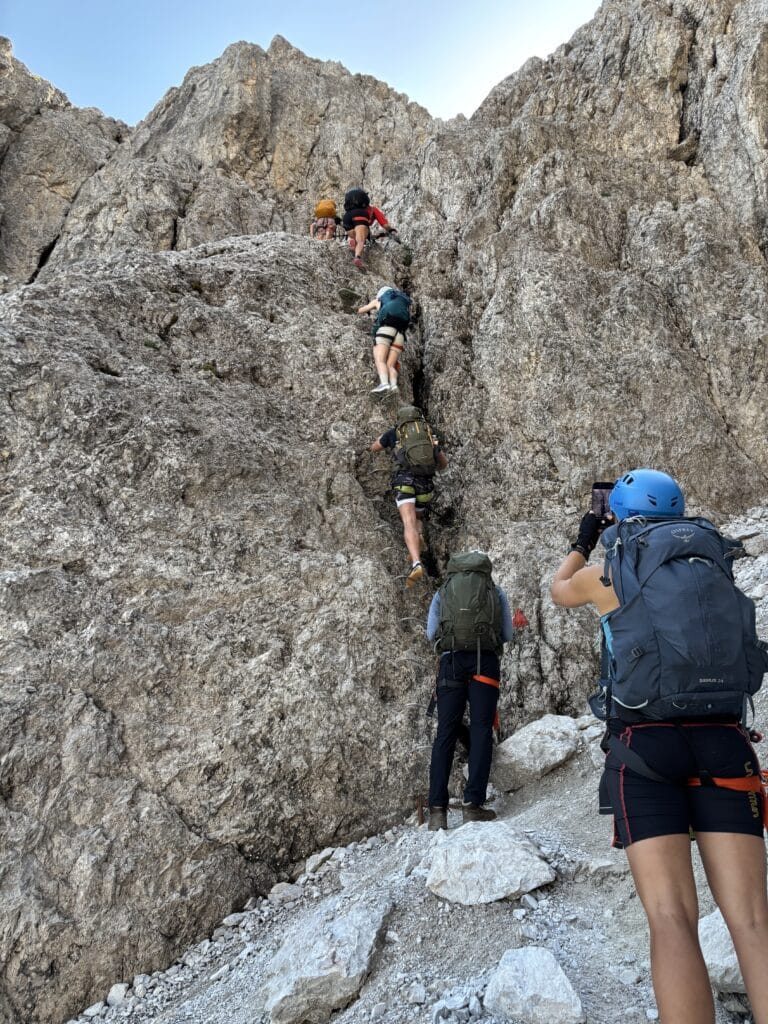
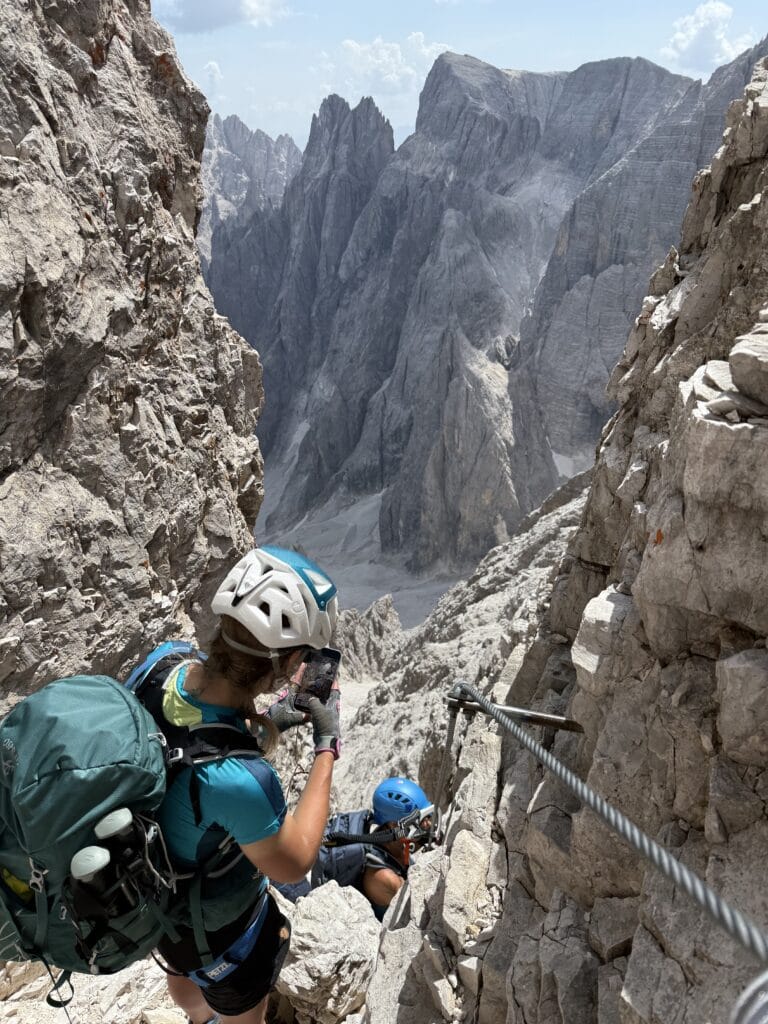
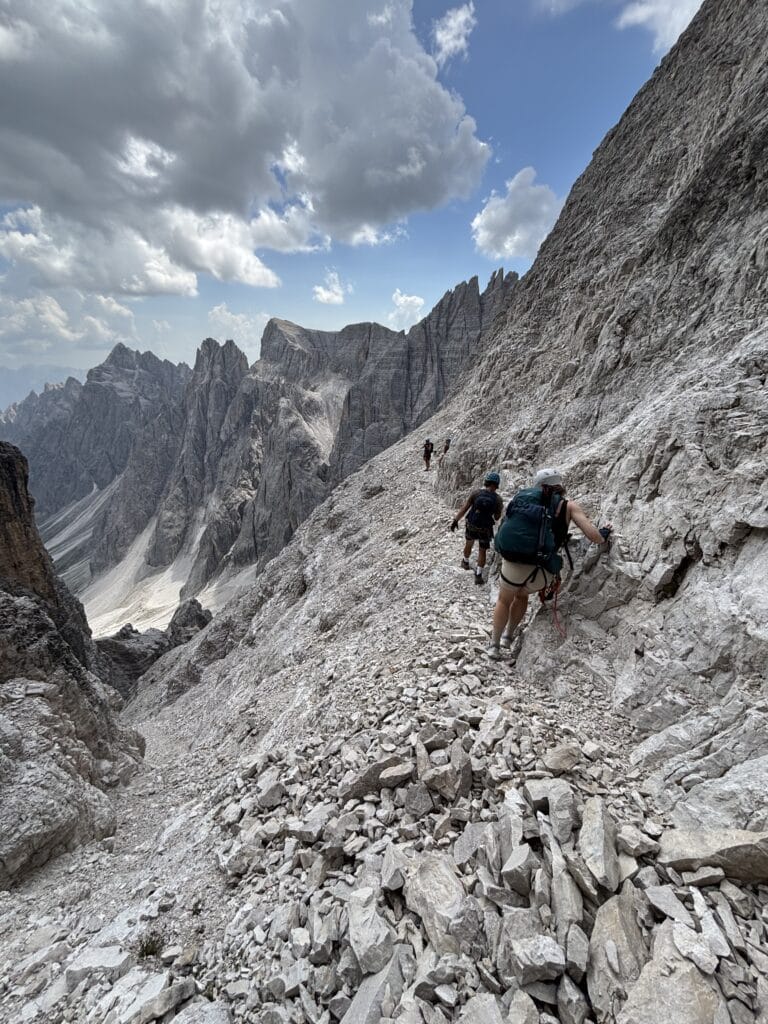
The route begins by takind the Croda Rossa lift up to the Rotwandwiesen hut. From there, the path goes towards the summit of Croda Rossa (2,965 m). We ascended taking the easy Via Ferrata Croda Rossa di Sesto (A/B), where 80% of the path is a hiking trail. Steep sections are protected by cables and ladders. The descent followed Via Ferrata Zandonella (C), which is difficult. It features many exposed areas and about 75% of the route consists of steep sections with via ferrata cables.
Hut Reservations and Accommodation
Rifugio Berti (1,950 m). Reservations can be made on the Rifugio Berti website. A deposit of €20 per person is required at the time of booking. Alpine club discounts apply.
- Price for a bed with half-board (breakfast and dinner): €66 to €78.
- Price for a bed without food: €32.

Day 2: Rifugio Berti to Rifugio Carducci
- Starting point: Rifugio Berti
- Distance: 11 km
- Elevation gain: 1,139 m
- Finish point: Rifugio Carducci
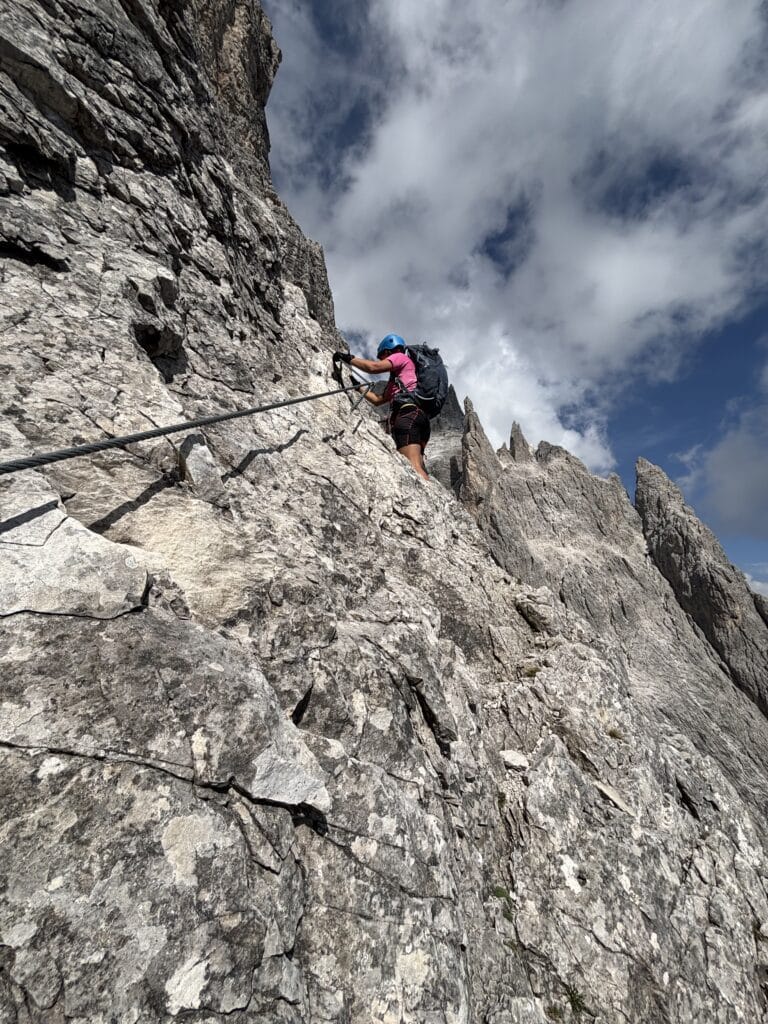
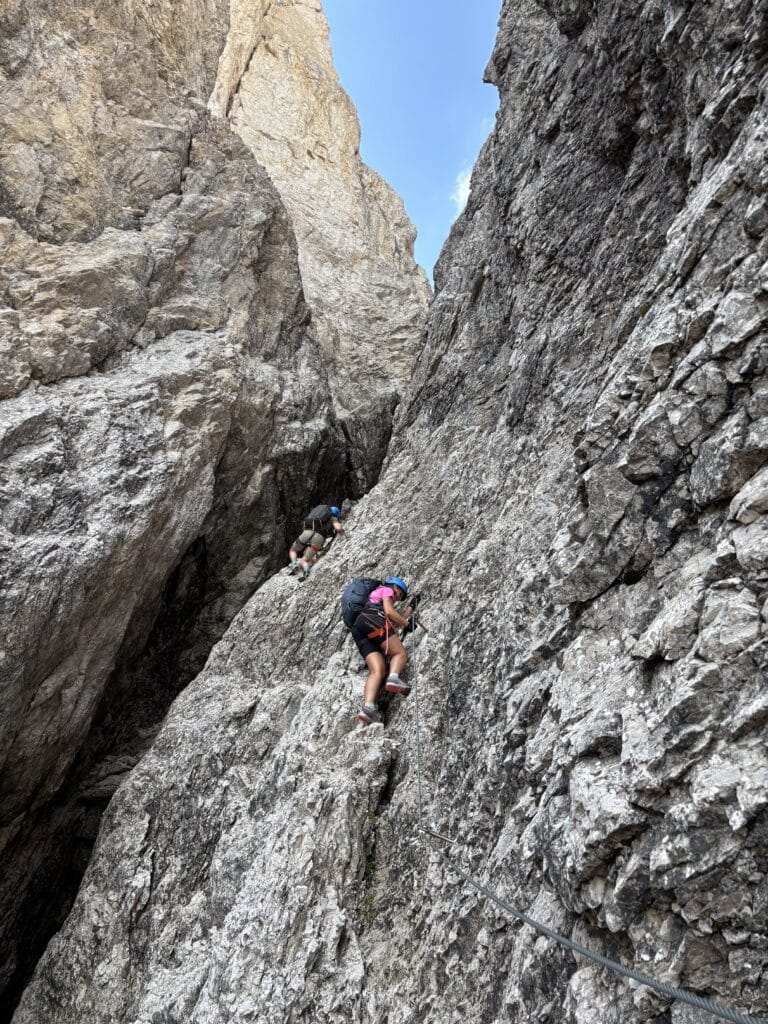
This is the longest and hardest day of the Monte Popera Circuit. It combines two very difficult C/D level via ferratas: Aldo Roghel and Cengia Gabriella. This is the shortest path between the Berti and Carducci huts, so if you’ve planned your stay there, there are no convenient alternatives. Once you start the ferratas, there are also no exit routes to bail out from the trek. Due to the difficulty and length, very few people choose this route—we met only two other hikers and quickly lost sight of them, leaving us alone for the rest of the day. What a luxury in the popular Dolomites!
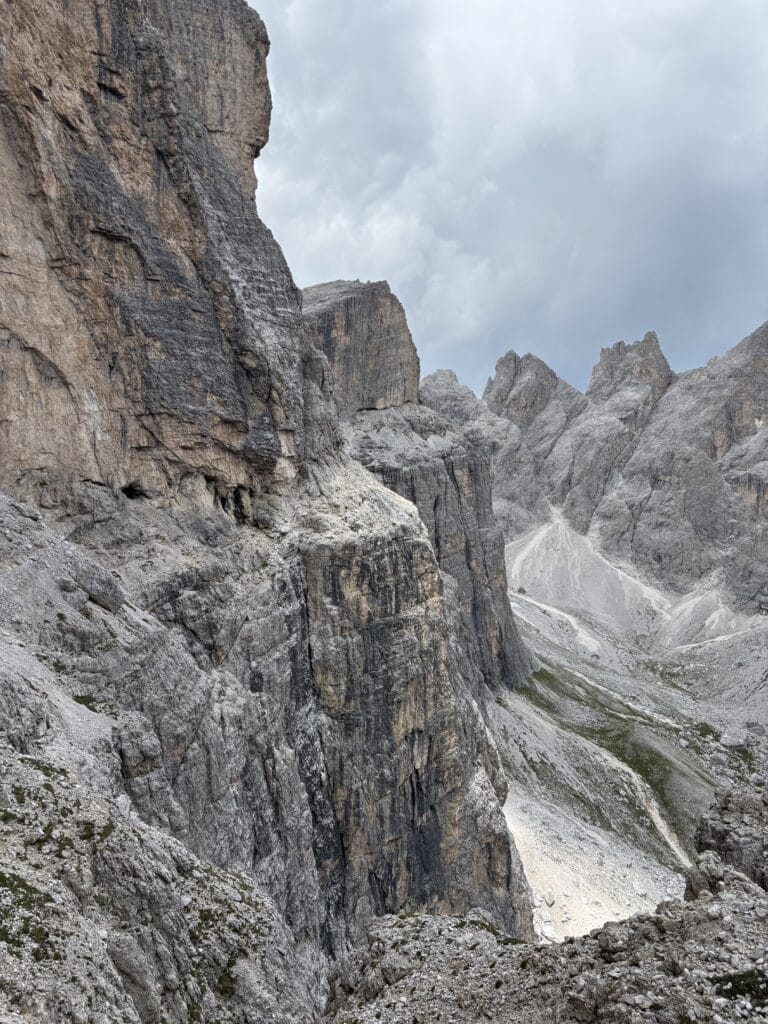
The approach to Via Ferrata Aldo Roghel goes through a long gravel gorge. 95% of the route consists of climbing metal cables and rocks. Helpful steps are installed in the most difficult spots; in a few sections, we even had to overcome overhanging rocks. Via Ferrata Cengia Gabriella is technically easier but significantly longer. Most of it follows a ledge circling the Monte Giralba mountain. There are many exposed areas, and not all have protective cables. It required a lot of attention and focus.
Hut Reservations and Accommodation
Rifugio Carducci (2,295 m). Reservations open in February and can be made via sending an email. A deposit is required; bank transfer details are provided by email.
Alpine club discounts apply.
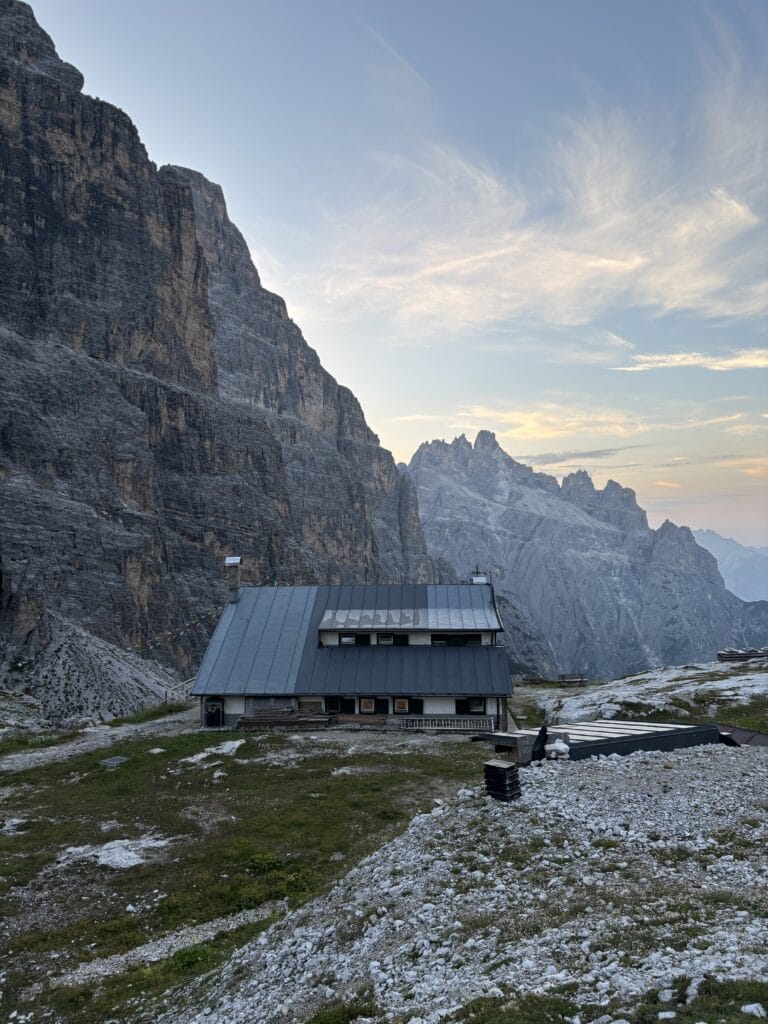
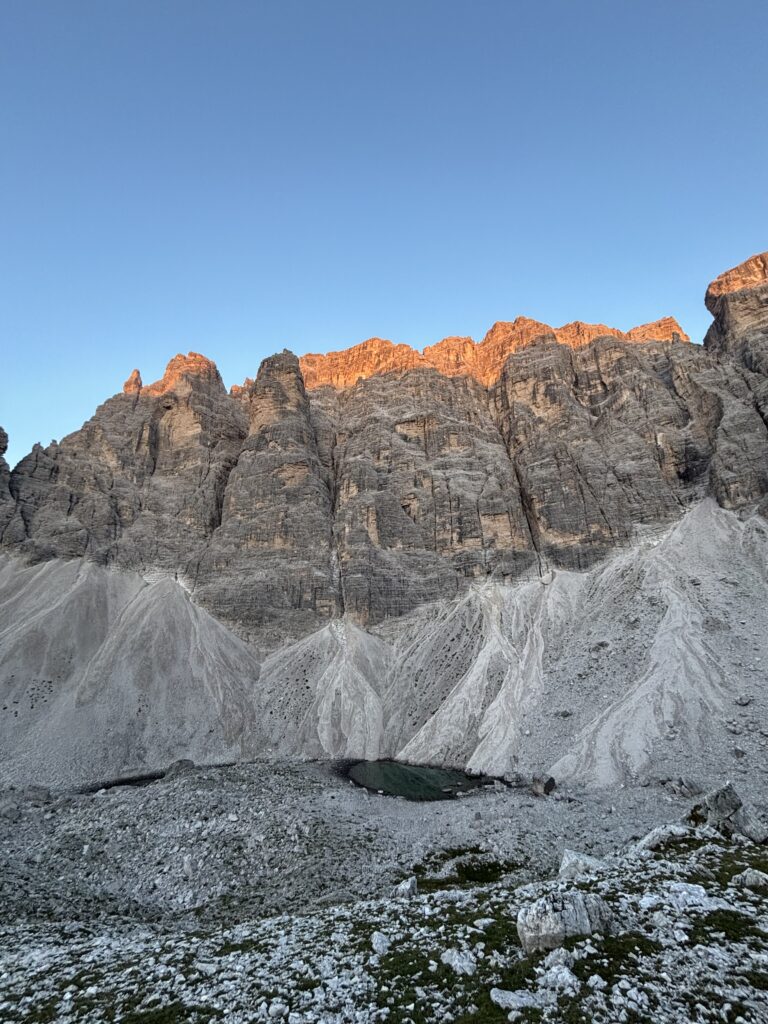
Day 3: Rifugio Carducci to Rifugio Zsigmondy Comici
- Starting point: Rifugio Carducci
- Distance: 900 km
- Elevation gain: 600 m
- Finish point: Rifugio Zsigmondy Comici
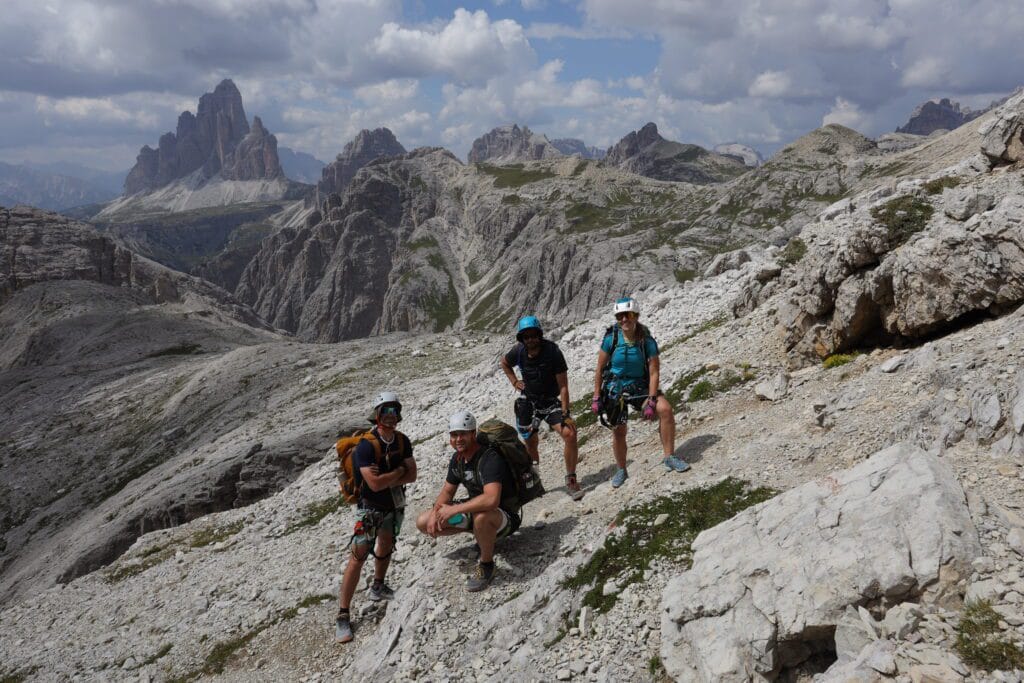
The second day of the Monte Popera Circuit had drained the energy of many, so on day three, part of the team wanted to take a break from via ferratas. When I went to pay for the hut, the warden encouraged us not to skip Via Ferrata Severino Casara (C) – otherwise, he said, we’d miss the most beautiful views the area has to offer. This ferrata was already in my travel plan.
We split into two groups: some rested and took the hiking path to the Comici hut (about 2 hours), while the rest of us turned toward the via ferrata. As soon as we passed the first part of the route, it became clear that the warden knew his surroundings well—the views were the most beautiful of all four days. Via Ferrata Severino Casara was only opened in 2015 and is more accessible; we met more people here. 60% of the route is protected by metal cables, and it features two suspension bridges.
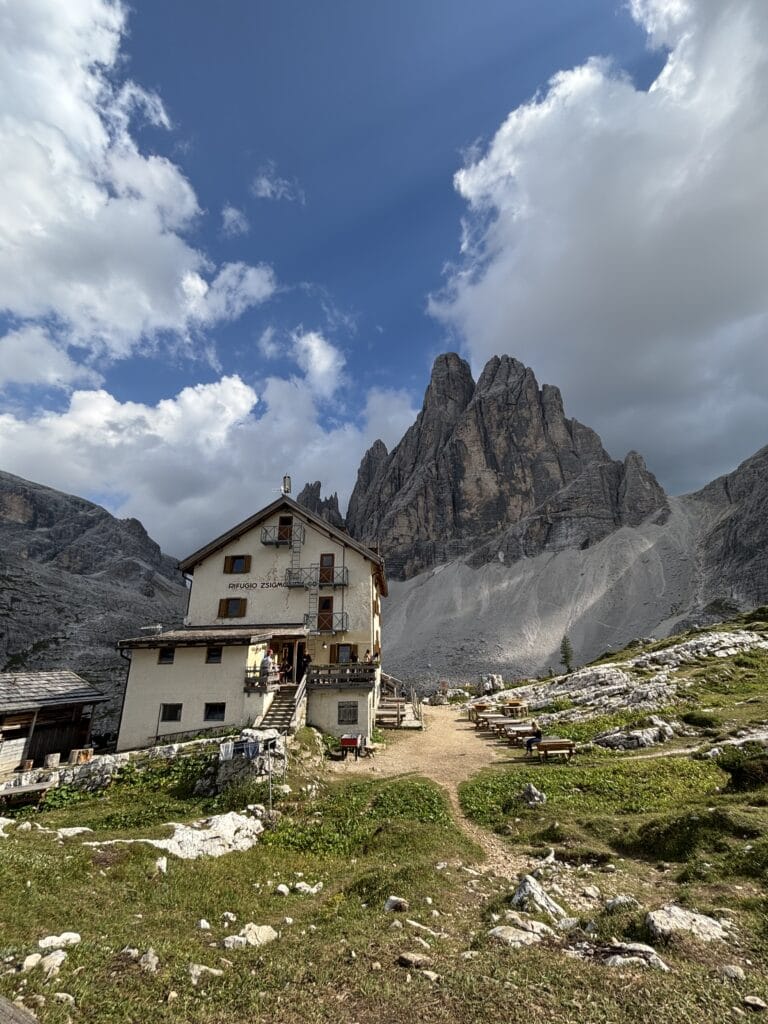
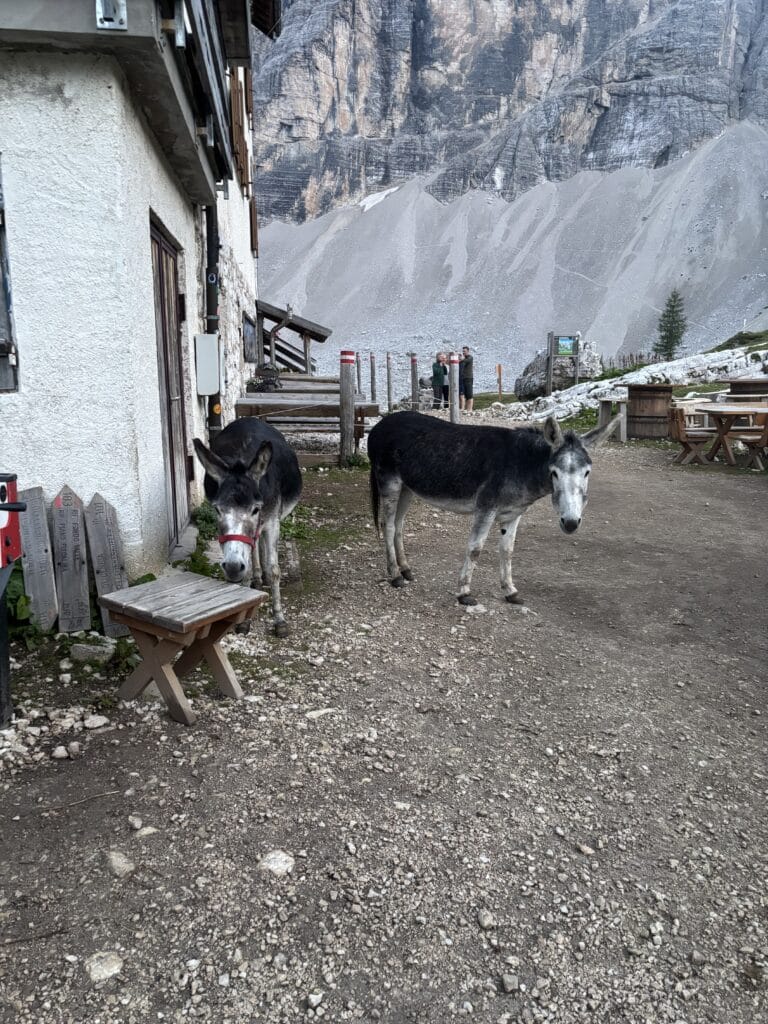
The Rifugio Zsigmondy Comici hut is also very popular, as there are many easy ways to reach it. While the previous huts had a true mountain refuge atmosphere, this one felt more like a busy tavern—lots of loud, celebrating crowds!
Hut Reservations and Accommodation
Rifugio Zsigmondy Comici (2,224 m). Reservations can be made via the Hut Reservation system. A deposit of €20 per person is required. Alpine club discounts apply.
- Price for a bed with half-board: €66 to €78.
- Price for a bed without food: €32.
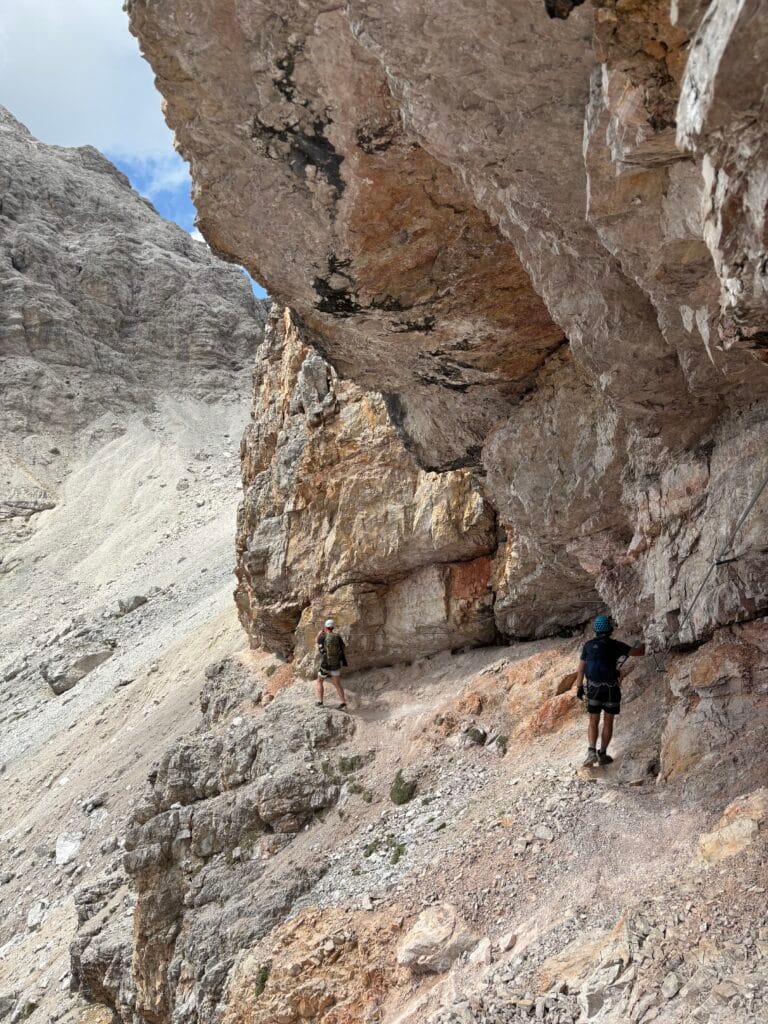
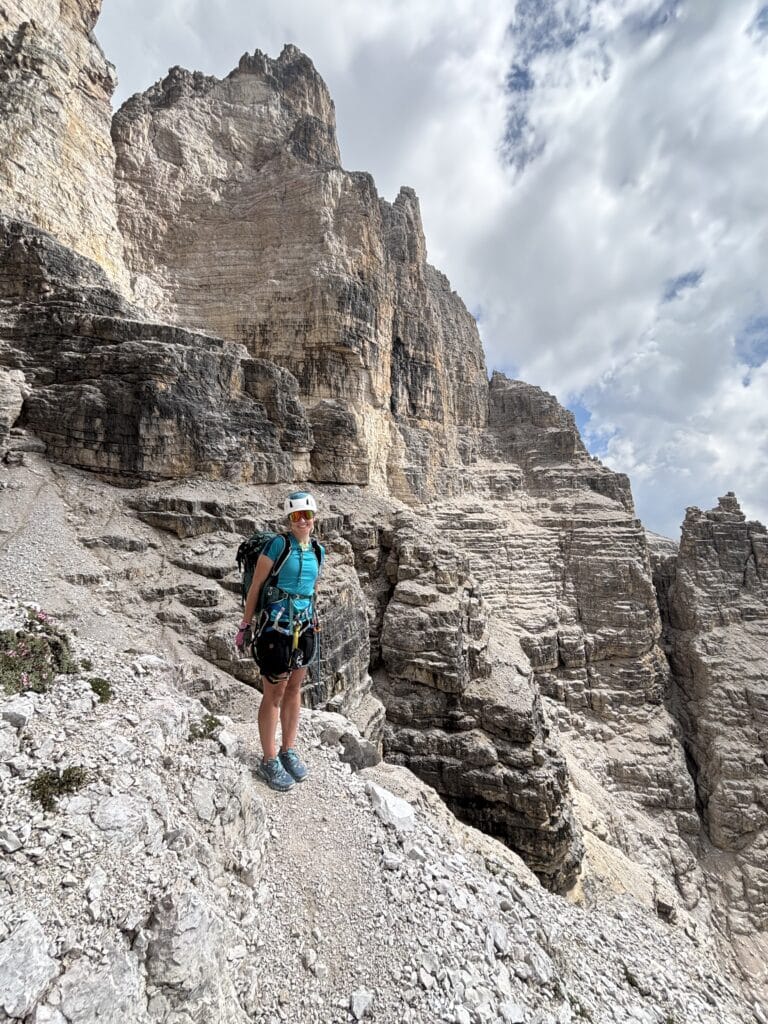
Day 4: Rifugio Zsigmondy Comici to Rotwand Lift
- Starting point: Rifugio Berti
- Distance: 11 km
- Elevation gain: 1,139 m
- Finish point: Rifugio Carducci
The final and easiest day of the Monte Popera Circuit. Most of Via Ferrata Strada degli Alpini (Alpinisteig) follows a wide ledge with metal cables. The northern slopes were covered in snow in some places. We finished the route right where we started—at the Rotwandwiesen hut. Before heading down with the lift, we lay on the grass for a while and stopped at the hut for a meal. The fatigue from all those days and difficult ferratas finally set in. We were all thrilled to have completed such a beautiful route in the Dolomites!
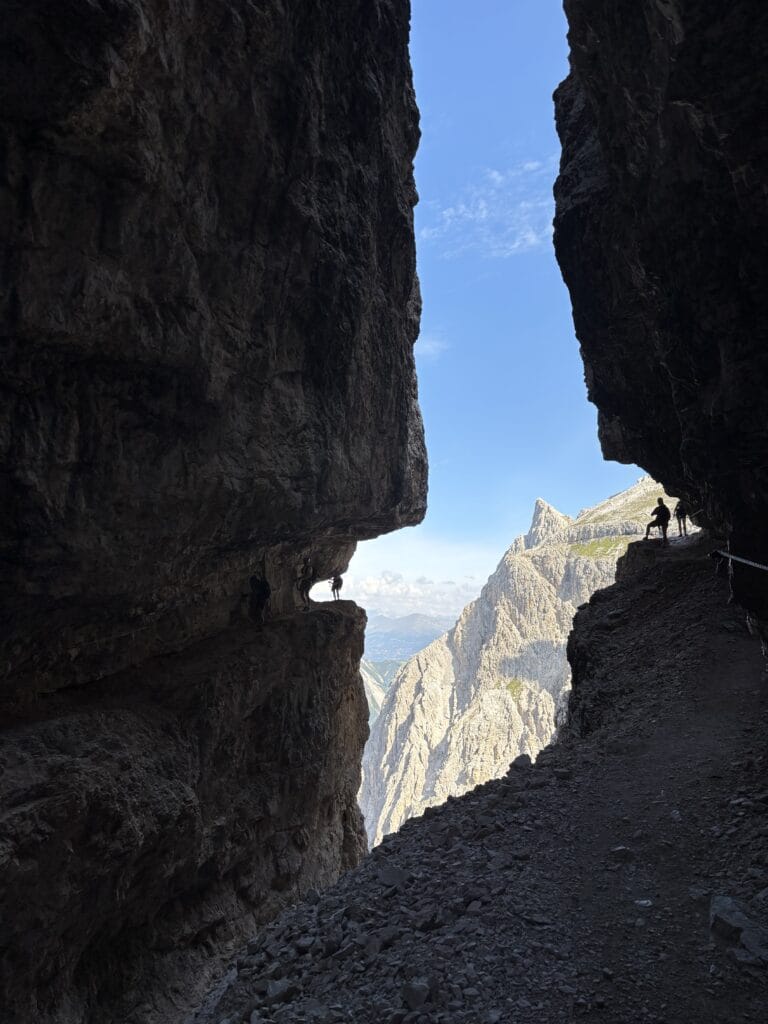
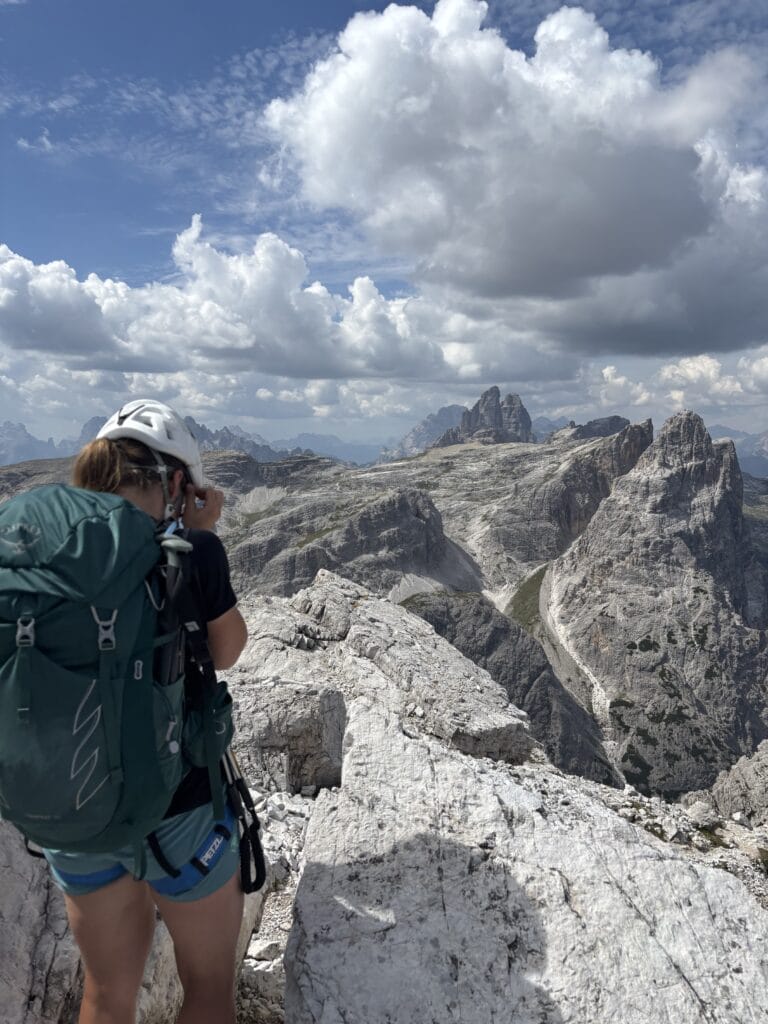
The Monte Popera Circuit is an ideal route for experienced via ferrata enthusiasts looking for a long, technically challenging and extremely scenic trek in the heart of the Sesto Dolomites.
Continue Exploring
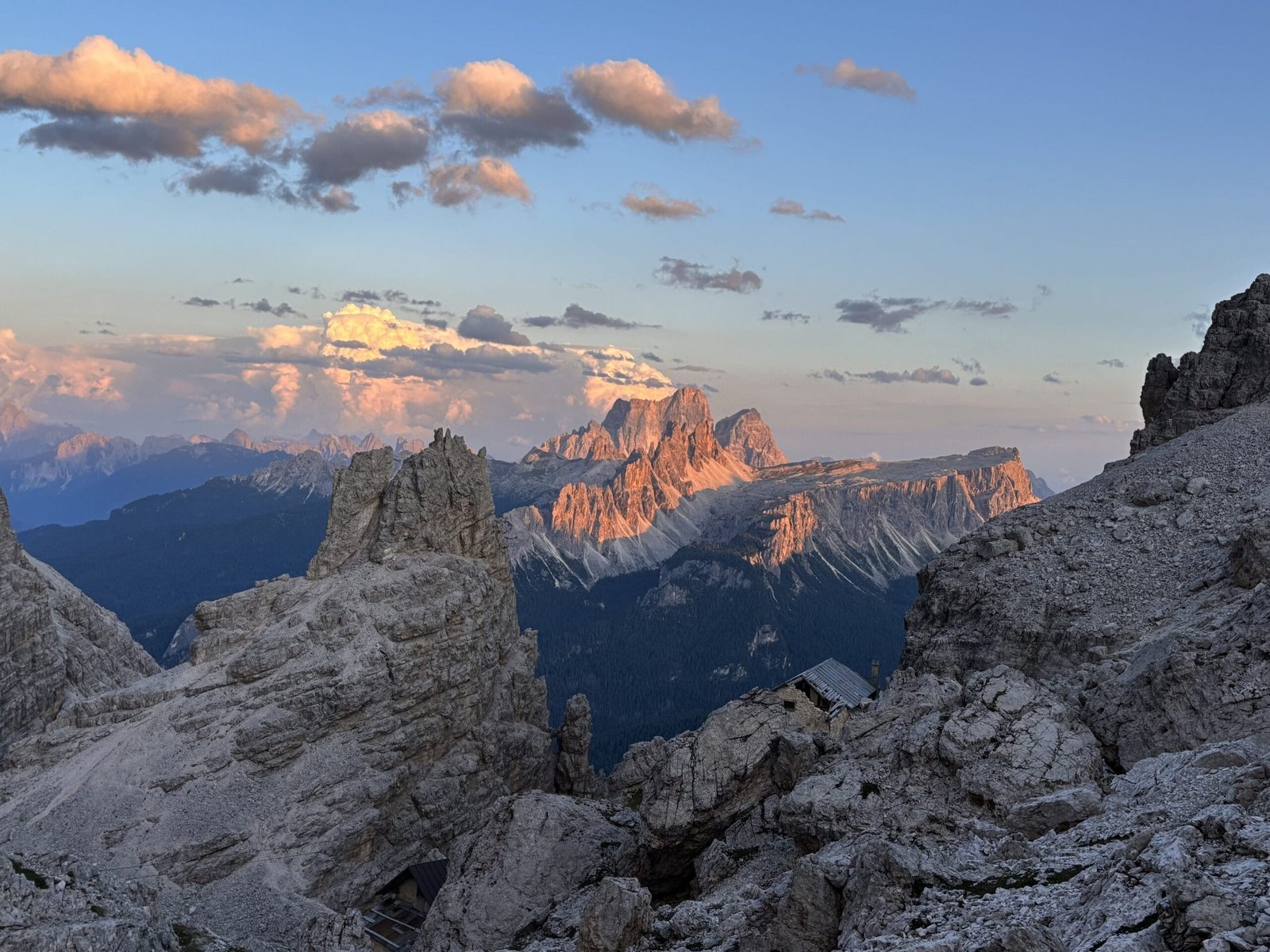
Explore Via Ferratas in the Italian Dolomites
Explore the most iconic via ferrata routes, practical route guides and multi-day itineraries across the Italian Dolomites.
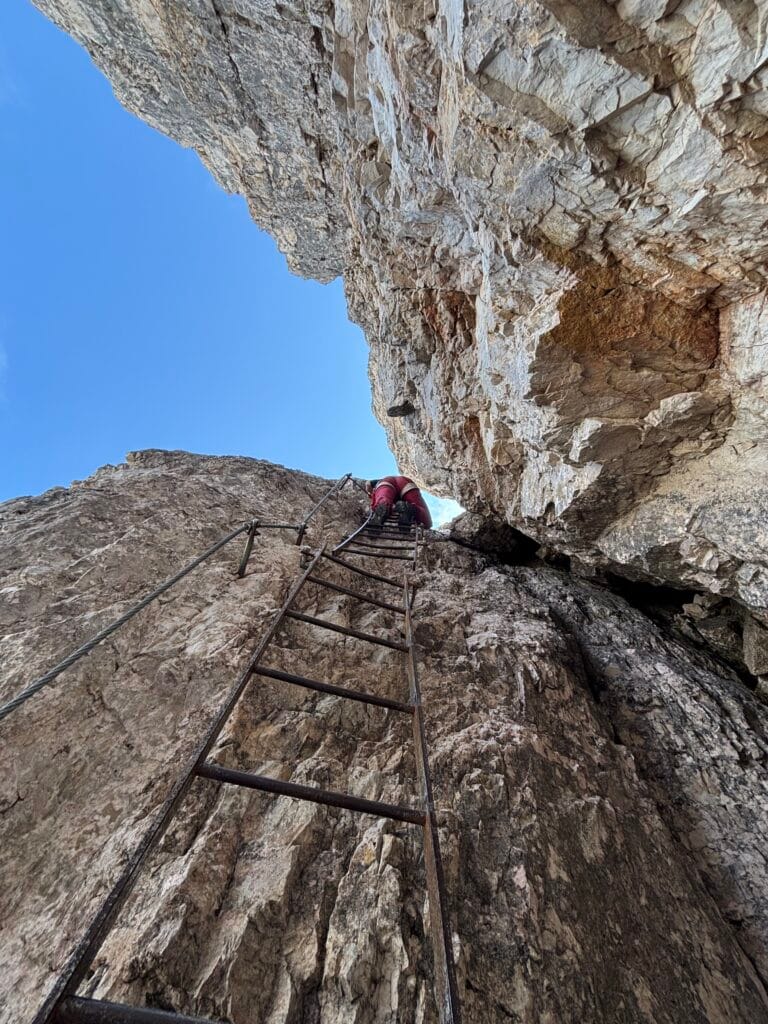
Explore All Routes
Browse the complete via ferrata library and discover route guides from multiple Alpine regions.
Beginner friendly routes
Looking for beginner friendly via ferratas in the Alps? Check the beginner guide.
Frequently Asked Questions (FAQ)
❓Is Monte Popera Circuit suitable for beginners?
The Monte Popera Circuit is not considered suitable for beginners. It is one of the more challenging high altitude treks in the Italian Dolomites. On the way you need to pass very difficult via ferratas, that require experience and feeling comfortable with exposure. You can explore easier via ferratas in the Via ferratas for Beginners section.
❓What do I need to pack for Monte Popera Circuit hut-to-hut route?
Keep it as light as possible. You will have long days and will be tackling hard via ferratas. Aim to fit into no more than 30 liters backpack. For sleeping in huts you will need a sleeping bag liner. Also, make sure to bring warm layers, water, snacks and gear needed for via ferratas. You can find a list of things to pack in the article: Via Ferrata: What You Need to Know Before Starting.
What is your favorite destination in the Dolomites? Share in the comments below!